
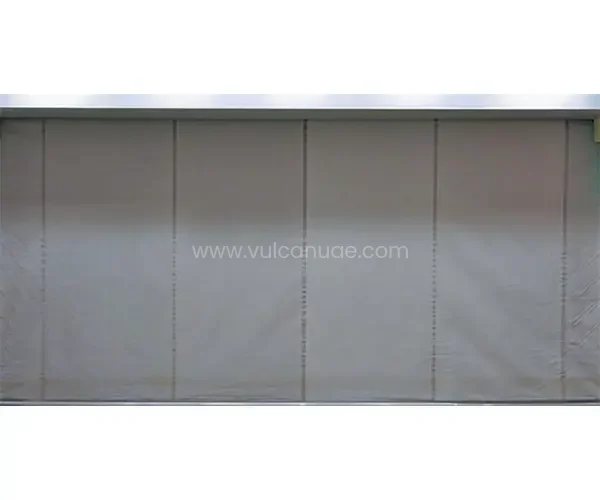
Fire Curtains, Smoke Curtains and Elevator Smoke Curtains: How They Work and Where They Fit
Open-plan lobbies, atria, wide shopfronts and lift lobbies are difficult to protect with walls and doors without losing the openness the architect wanted. Fire and smoke curtains are a way to have both: they stay rolled up and out of sight in a compact headbox, and descend only when the fire alarm operates.
What is the purpose of smoke curtains?
Smoke is what harms most people in a building fire, and it spreads fast along ceilings and up through voids. Smoke curtains are barriers of fire-resistant fabric that limit that movement. They are used to divide a ceiling space into smoke reservoirs, to channel smoke towards extract points, and to stop it spilling into atria, stairs and escalator voids. Some are fixed in place; others are automatic and drop on alarm.
What fire curtains do
Fire curtains go a step further. They close an opening and resist the passage of fire for a rated period, doing a job similar to a fire shutter but with a lighter, more compact unit. Typical locations are openings between compartments, kitchen serveries, shopfronts, lobbies and around escalators and open stairs.
Elevator smoke curtains
Lift shafts run the height of a building and standard lift landing doors are not smoke seals. In a fire a shaft can act as a chimney, carrying smoke to other floors. Elevator smoke curtains are installed above each lift entrance and deploy over the landing doors on alarm, sealing against the frame to hold smoke back. They are one option where a separate enclosed lift lobby is not wanted.
How automatic curtains deploy
- The curtain is held up by its motor while the building is in normal use.
- On a signal from the fire alarm, it descends at a controlled speed.
- Good systems are designed to descend by gravity if power is lost, so they fail safe.
- Side guides keep the fabric in place and close the edges.
- On escape routes, the design must allow people through, for example by a delayed or partial descent or an emergency retract control.
Curtain or shutter?
A fire rated rolling shutter is a steel barrier that also gives security. A curtain is lighter, needs less headroom and structure, and disappears into the ceiling, which suits finished interiors. Many buildings use both in different places.
What to plan for
- Performance. The fire strategy states what each opening needs: smoke control only, or a fire rating, and for how long. Ask the supplier for the test evidence that matches.
- Space. The headbox and side guides have to be coordinated with ceilings, structure and services.
- Controls. Interface with the fire alarm panel and power supply, including backup.
- Clear drop zone. Nothing can be placed where the curtain lands. Mark it and manage it.
- Testing. Automatic curtains need regular operational tests and servicing, with records.
Frequently asked questions
Are fire curtains and smoke curtains the same thing?
No. Smoke curtains control the movement of smoke. Fire curtains are rated to resist fire across an opening. Some products do both; check the evidence.
Can people escape through a deployed curtain?
Only where the system has been designed for it. That is decided in the fire strategy, not assumed.
Do curtains replace fire doors?
They complement them. Doors remain the normal way of closing openings that people walk through every day.
Vulcan supplies Clover smoke and fire curtains. Ask us which systems in the range suit your openings.
Talk to Vulcan about your project
Working on a fire strategy that needs curtains? Send us your requirement with the opening sizes, drawings or a door schedule, and our team will come back with a suitable configuration and quotation. You can also call +971 6 743 6665 or WhatsApp +971 55 608 8487.

