
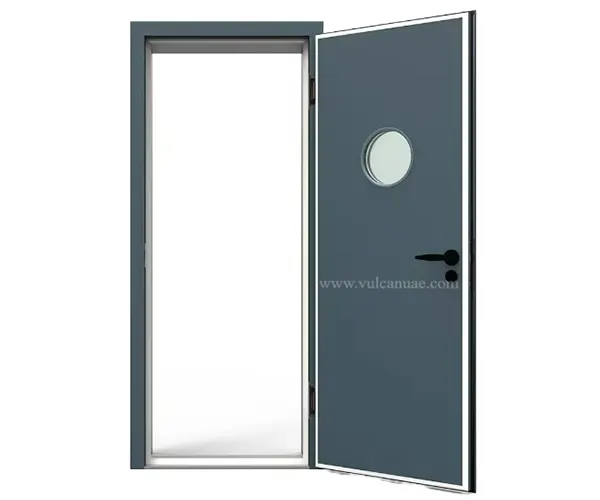
Soundproof Doors: How Acoustic Doors Are Rated, Built and Chosen
People ask for soundproof doors when a meeting room leaks conversations, a plant room hums through a corridor or a studio needs silence. Strictly, no door blocks all sound. What an acoustic door does is reduce the sound passing through an opening by a measured amount, and the right question is how much reduction the room needs.
How acoustic doors are rated
Acoustic performance is measured in a laboratory on a complete door set and reported as a single number in decibels, most commonly a sound reduction index (Rw) or a Sound Transmission Class (STC). A higher number means more sound is stopped. Two points matter when comparing figures:
- The rating belongs to the tested assembly: leaf, frame, seals and any glazing together. A leaf on its own has no meaningful rating.
- Decibels are logarithmic. A difference of a few decibels is clearly audible, so a door rated slightly lower can undo the performance of a well-built wall.
An acoustic consultant normally sets the target for each opening so that the door suits the wall it sits in.
What makes a door acoustic
- Mass and construction. A dense, layered core inside steel or timber faces resists sound better than a hollow or lightweight leaf.
- Perimeter seals. Compression seals on the head and jambs close the air gaps that sound travels through.
- Threshold seal. An automatic drop seal or a raised threshold closes the gap at the floor, usually the largest leak.
- Frame installation. The frame is packed or grouted and sealed to the wall, with no voids behind it.
- Glazing. Vision panels use acoustic glass in sealed surrounds and are kept as small as the design allows.
Because the seals do so much of the work, a correctly adjusted door that closes firmly matters as much as the leaf.
When are acoustic fire rated doors required?
Many openings that need sound control also sit on a fire compartment line: cinema auditoriums, hotel rooms, plant rooms, meeting rooms off escape corridors. There the door must be an acoustic fire rated door, with evidence that the same construction achieves both the acoustic rating and the fire rating. Two separate certificates for two different builds are not enough, so ask the manufacturer for evidence covering the configuration you are buying.
Where soundproof doors are used
Cinemas and theatres, recording and broadcast studios, auditoriums and conference rooms, hotels, hospitals and clinics, schools and music rooms, offices, and plant and generator rooms.
What to send for a quotation
- The acoustic rating required and whether it is Rw or STC.
- Fire rating, if any.
- Opening size, single or double leaf, and wall construction.
- Vision panels, finish and hardware.
Frequently asked questions
Can I make an existing door soundproof?
Adding seals and a drop seal to a solid door helps noticeably. Reaching a specified rating needs a tested acoustic door set.
Why does my acoustic door still leak sound?
Usually because of gaps: a seal that does not touch, a drop seal out of adjustment, or an unsealed frame. Sound also travels around the door through ceilings, ducts and thin walls.
Are large acoustic openings possible?
Yes. Very large openings use sliding or vertically moving leaves, such as elephant doors and stage doors.
See Vulcan’s acoustic doors for the range, and our article on the acoustic benefits of fire rated glazed partitions.
Talk to Vulcan about your project
Need sound control on a project? Send us your requirement with the opening sizes, drawings or a door schedule, and our team will come back with a suitable configuration and quotation. You can also call +971 6 743 6665 or WhatsApp +971 55 608 8487.

